
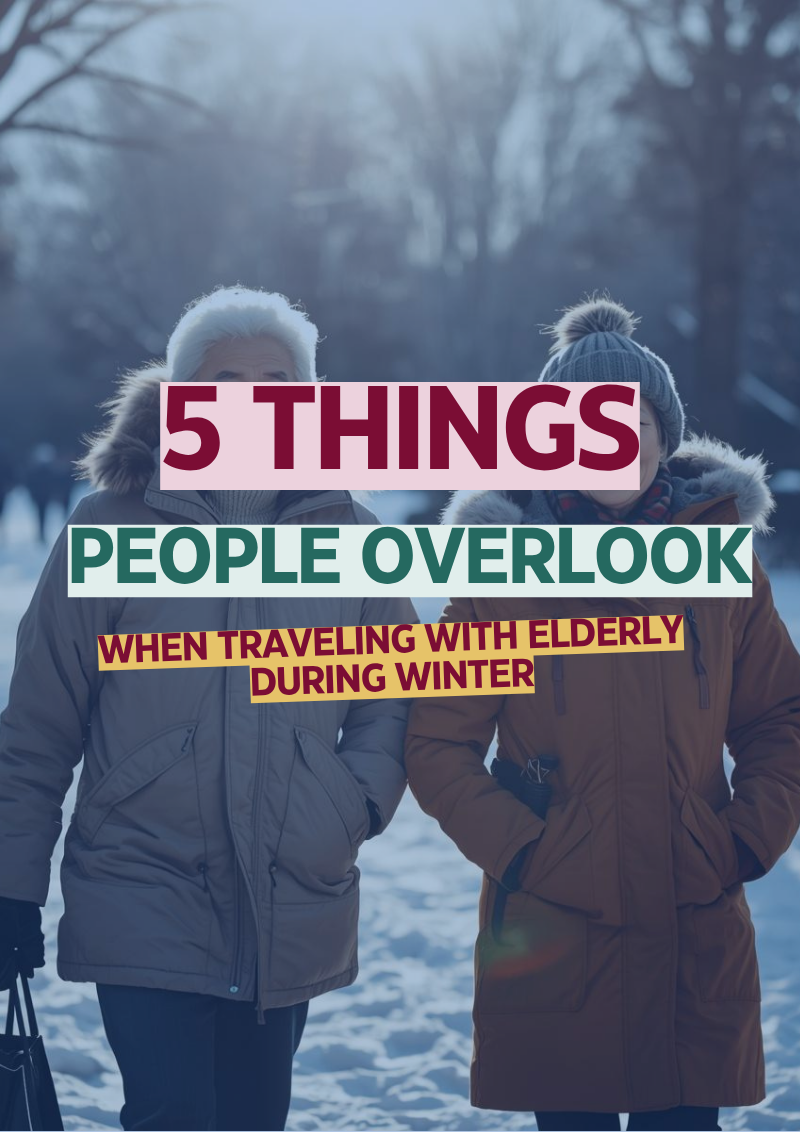
Traveling with elderly parents to a winter destination can be an incredibly meaningful experience. For many people who grew up in tropical countries, seeing snow-covered mountains, winter landscapes, and charming old towns for the first time is truly magical. However, winter travel with seniors requires extra preparation. Elderly travelers are generally more sensitive to cold temperatures, slippery surfaces, and sudden weather changes.
Here are five important things families often overlook when bringing elderly parents to cold destinations.
1.Windchill can make temperature colder
Many travelers only check the actual temperature, but they often forget about wind chill.
Wind chill describes how cold it feels when wind is added to the temperature. For example:
- 5°C with strong wind can feel like -5°C
- Sometimes it can feel colder than a calm 0°C day
For elderly travelers, this can quickly cause discomfort and increase the risk of getting too cold.
How to manage wind chill
The key is proper winter layering:
• Base layer: thermal clothing to retain heat
• Middle layer: fleece or insulated sweater
• Outer layer: windproof winter jacket
• Accessories: gloves, hat, and scarf
Proper layering helps trap body heat and block cold wind.
2. Ignoring Indoor Heating
Many first-time winter travelers prepare for the cold outdoors, but they forget that indoor spaces in cold countries are usually very warm. Restaurants, trains, malls, and hotels often have strong indoor heating systems. This means elderly travelers can suddenly go from -5°C outside to 22°C indoors.
If they are wearing heavy winter jackets without removable layers, they may quickly feel uncomfortable, sweaty, or dehydrated.
3.Black Ice
One of the most dangerous winter hazards is something many travelers cannot even see is black ice. It forms when snow melts during the day and refreezes at night. Because it is transparent, it blends into the pavement and looks just like a normal road or sidewalk.
For elderly travelers, falls caused by black ice can lead to serious injuries.
How to reduce the risk
• Wear winter shoes with strong grip
• Walk slowly and carefully
• Use handrails whenever possible
• Avoid walking early in the morning when ice is more common
4.Exposed Hand, Ears and Neck
Many people focus on jackets but forget that heat escapes from smaller exposed areas such as:
• Hands
• Ears
• Neck
These areas are extremely sensitive to cold wind and can quickly feel numb. For elderly travelers, this discomfort can make outdoor sightseeing much shorter than expected.
5. Buying Winter Wear for One Trip
Another common dilemma is buying winter gear for a single trip. Winter jackets, boots, gloves, and thermal layers can be expensive, and for people living in tropical countries, they may only be used once every few years.
After the trip, these bulky items often take up valuable storage space at home. This is why many travelers today are considering renting winter wear instead of buying.
Rental allows families to:
• Access high-quality winter gear
• Avoid spending hundreds on items rarely used
• Skip the hassle of storing bulky winter clothes
For families traveling with elderly parents, renting also allows them to choose properly fitted and weather-appropriate gear for the destination.