
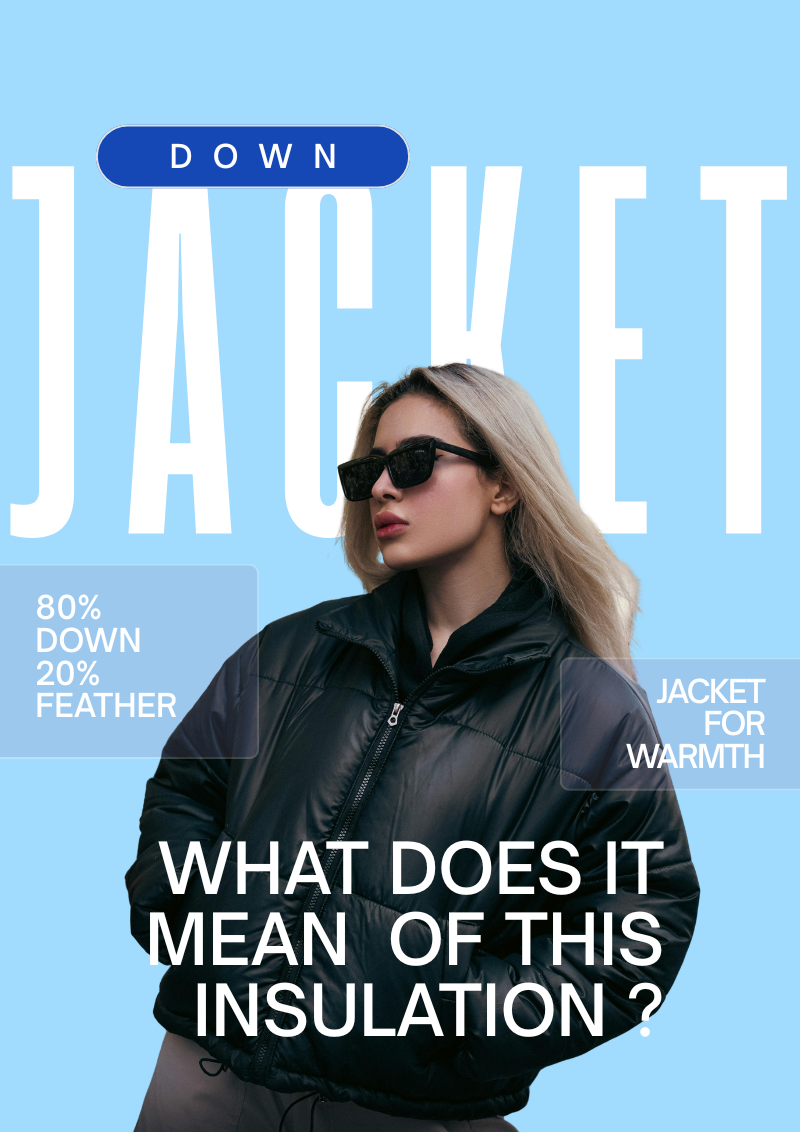
What 90/10, 80/20 and 50/50 Down Insulation Really Means
Planning your first winter holiday to Japan, Korea, Harbin, China or Europe?
You’ve probably seen winter jackets labelled like these:
- 90% Duck Down / 10% Feathers
- 80% Duck Down / 20% Waterfowl Feathers
- 50% Goose Down / 50% Feathers
Many first-time travellers assume: “The higher the percentage, the warmer the jacket.”
Not necessarily.
The insulation label tells you what’s inside the jacket, but it doesn’t tell the whole story. Factors such as fill power, jacket construction, waterproofing, windproof protection, and your activity level also determine how warm you’ll actually feel.
In this guide, we’ll explain what these labels mean, how warm each type of insulation is, and which one is suitable for your destination.
What Does “Down” Actually Mean?
Down is the soft, fluffy layer found underneath the outer feathers of ducks and geese.
Unlike feathers, down has no hard quill.
Instead, it forms tiny clusters that trap warm air around your body.
This trapped air acts as insulation, helping you stay warm even in freezing temperatures.
The more high-quality down a jacket contains, the lighter and warmer it can be.
What’s the Difference Between Down and Feathers?
Many people think down and feathers are the same thing.
They’re not.
| Down | Feathers |
|---|---|
| Soft fluffy clusters | Flat feathers with quills |
| Excellent insulation | Adds structure |
| Very lightweight | Heavier |
| Traps more warm air | Traps less air |
| More expensive | Less expensive |
Feathers help the jacket maintain its shape and durability, while down provides most of the warmth.
Understanding Winter Jacket Labels
90% Down / 10% Feathers
This means:
- 90% premium insulating down
- 10% supporting feathers
Warmness
★★★★★
This is considered premium insulation.
Advantages:
- Extremely warm
- Very lightweight
- Compresses easily
- Excellent warmth-to-weight ratio
Best for:
- Harbin
- Hokkaido
- Finland
- Norway
- Iceland
- Switzerland
- Temperatures below -10°C
80% Down / 20% Waterfowl Feathers
This is one of the most common insulation blends found in quality winter jackets.
It provides an excellent balance between:
- Warmth
- Durability
- Cost
Warmness
★★★★☆
Suitable for:
- Japan winter
- South Korea
- Northern China
- Europe
- Temperatures between -10°C and 0°C
For most Singapore travellers, this is more than sufficient when paired with proper layering.
50% Goose Down / 50% Feathers
This label often causes confusion.
Many people immediately think: “Goose down is better, so this jacket must be warmer.”
Not always.
Although goose down is generally larger and can provide better insulation than duck down, a jacket with only 50% down contains much less insulating material than an 80% or 90% down jacket.
Half of the filling consists of feathers, which add weight and structure but contribute less warmth.
Warmness
★★★☆☆
Suitable for:
- Cool winter days
- Cities with milder winters
- Temperatures around 0°C to 10°C
Examples include:
- Tokyo
- Osaka
- Seoul during warmer winter days
- Beijing in early winter
Duck Down vs Goose Down
This is one of the most searched questions by first-time winter travellers.
Duck Down
✔ More affordable
✔ Excellent insulation
✔ Widely used in premium jackets
✔ Ideal for most travellers
Goose Down
✔ Larger down clusters
✔ Higher potential fill power
✔ Slightly lighter
✔ Usually more expensive
However…
A 90% duck down jacket is often warmer than a 50% goose down jacket because it contains significantly more insulating down.
The type of bird is only one factor.
Warmness Guide by Temperature
| Temperature | Recommended Insulation |
|---|---|
| 0°C to 10°C | 50% Goose Down / 50% Feathers or 60–70% Down |
| -10°C to 0°C | 80% Down / 20% Feathers |
| Below -10°C | 90% Down / 10% Feathers or premium expedition jackets |
Important: These are general recommendations. The actual warmth also depends on the jacket’s fill power, shell fabric, windproofing, waterproofing, layering, and how active you are.
Why Fill Power Matters Even More
Here’s something many retailers don’t explain:
Two jackets can both say: 90% Down / 10% Feathers
Yet one may be much warmer than the other.
That’s because of fill power (FP).
Fill power measures how much air the down can trap.
Higher fill power means:
- Better insulation
- Less weight
- Greater loft
- Improved warmth
Typical ranges:
- 450–550 FP – Suitable for cool winters
- 600–700 FP – Excellent for Japan and South Korea
- 700–800 FP – Very warm for Harbin and Northern Europe
- 800+ FP – Expedition-grade performance for extreme cold
A jacket with 80% down and 700 FP can outperform one with 90% down and only 500 FP.
That’s why experienced travellers look at both the down percentage and the fill power.
Which Jacket Should Singapore Travellers Choose?
Travelling to Japan?
Choose:
- 80/20 down for most destinations
- 90/10 if visiting Hokkaido or mountainous areas
Travelling to South Korea?
An 80/20 down jacket is suitable for most winter trips, especially when paired with thermal layers.
Travelling to Harbin or Northern China?
Temperatures can drop below -20°C.
Choose:
- 90/10 down
- High fill power (700 FP or above)
- Windproof and waterproof outer shell
Travelling to Europe?
It depends on the country and season:
- Western Europe: 50/50 or 80/20 may be enough
- Northern Europe or Lapland: 90/10 with high fill power is recommended
When choosing a winter jacket, don’t focus only on the 90/10, 80/20, or 50/50 label.
A truly warm jacket depends on the combination of:
- Down percentage
- Fill power
- Waterproof protection
- Windproof construction
- Proper layering
- The temperature of your destination
At WinterBuddy Singapore, we carefully select winter jackets based on real travel conditions rather than just the insulation label. Whether you’re heading to Japan, Korea, Harbin, Europe, or the Arctic, our team can recommend the right jacket for your destination and expected temperatures.