
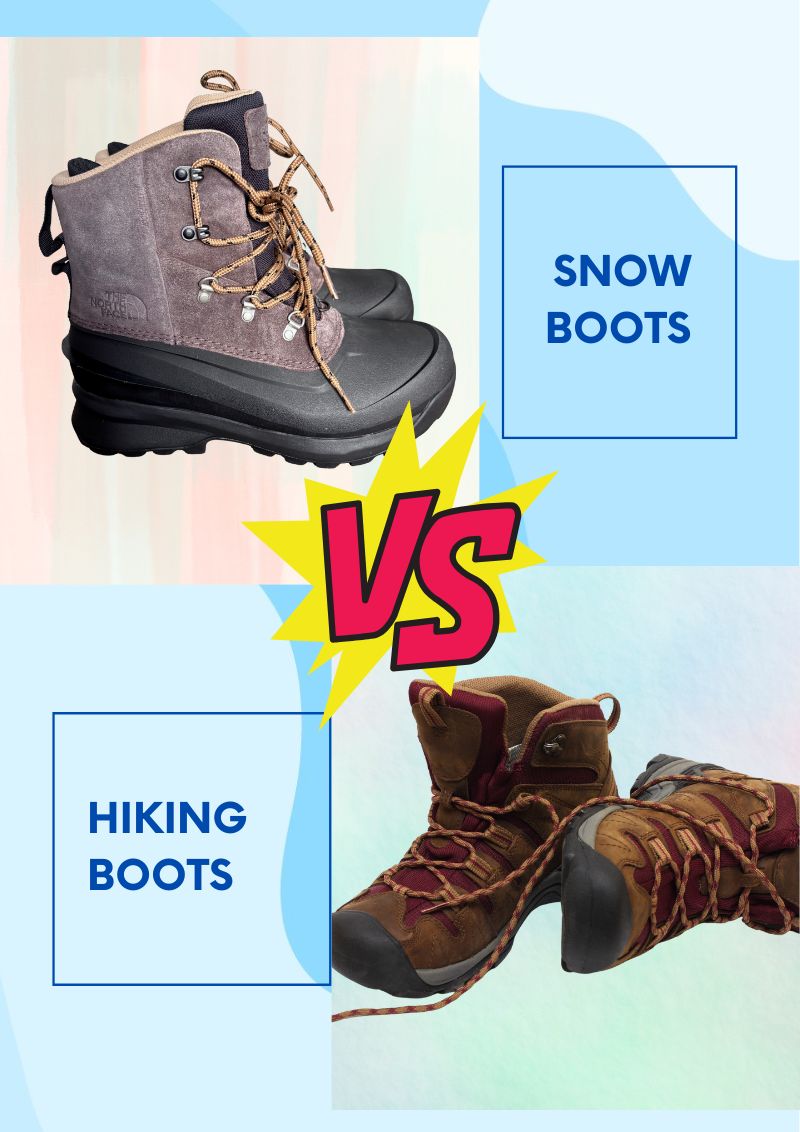
Planning a winter trip and wondering whether your hiking or trekking boots are enough for snow?
The answer depends on where you’re going, how cold it will be, how much snow you’ll encounter and how long you’ll be outdoors.
Snow boots and hiking boots may look similar, but they are designed for different conditions.
Quick Answer: Snow Boots or Hiking Boots?
Choose snow boots for very cold and snowy destinations such as Harbin, Lapland or Hokkaido, especially if you’ll spend long periods outdoors or walk through snow.
Hiking boots may be enough for milder winter destinations if they are waterproof, have good grip and you’re mainly walking on cleared streets or trails.
Most importantly:
Waterproof doesn’t automatically mean warm.
Check whether your hiking boots are also insulated before using them for very cold conditions.
Snow Boots vs Hiking Boots: What’s the Difference?
| Feature | Snow Boots | Hiking / Trekking Boots |
|---|---|---|
| Main purpose | Cold and snow | Hiking and uneven terrain |
| Insulation | Usually insulated | Depends on model |
| Waterproofing | Usually designed for wet/snowy conditions | Depends on model |
| Grip | Winter-focused | Trail-focused |
| Deep snow | Generally better | Not always suitable |
| Long-distance walking | Can be heavier | Often more comfortable |
| Extreme cold | Insulated models are more suitable | Only if designed for winter |
Important: Not all snow boots or hiking boots perform the same. Always check the specifications of the actual boot.
What Are Snow Boots?
Snow boots are designed for cold, snowy and wet winter conditions.
A good pair usually offers:
- Insulation
- Water-resistant or waterproof protection
- Good winter grip
- Higher coverage to help keep snow out
- Enough room for thermal or wool socks
For very cold destinations, insulation is particularly important because your feet can be exposed to cold ground for long periods.
What Are Hiking or Trekking Boots?
Hiking boots are mainly designed for walking on trails and uneven terrain.
They often provide good grip, ankle support and walking comfort. Some are waterproof, but not all hiking boots are insulated for extreme cold.
So instead of asking:
Are hiking boots good for snow?
Ask:
Are my hiking boots waterproof, insulated and suitable for the temperature I’m travelling to?
Waterproof Does Not Mean Warm
This is one of the biggest misunderstandings when choosing winter footwear.
Waterproofing helps keep moisture out.
Insulation helps keep your feet warm.
A waterproof hiking boot may keep your feet dry but still not provide enough warmth for several hours outdoors in extreme cold.
For very cold destinations, look for both insulation and water protection.
Do You Need Snow Boots for Harbin?
For Harbin in December or January, particularly if you’re visiting Harbin Ice and Snow World or China Snow Town (Xuexiang), insulated snow boots are generally a better choice than ordinary hiking shoes.
Look for:
- Good insulation
- Water resistance
- Winter-appropriate grip
- Comfortable fit with thermal or wool socks
For the complete outfit, read our What to Wear in Harbin in December & January
Do You Need Snow Boots for Japan or Korea?
Not always.
For city trips to Tokyo, Osaka or Seoul, suitable waterproof hiking boots or other winter footwear may be enough depending on the weather and your itinerary.
But for Hokkaido, ski resorts and heavily snowy areas, insulated snow boots are more useful.
So don’t choose footwear based only on the country.
Destination + temperature + snow conditions + activities matter more.
What About Grip on Ice?
Good grip is important, but snow and ice are different surfaces.
A boot that performs well in snow can still be slippery on smooth ice. Look for a winter-appropriate outsole with good tread, but don’t assume any snow boot makes you slip-proof.
Walk carefully on icy surfaces and use additional traction aids when appropriate.
So, Snow Boots or Hiking Boots?
Here’s the simple rule:
Mild winter + little snow + lots of walking
→ Suitable waterproof hiking boots may be enough.
Very cold + snow + long outdoor exposure
→ Insulated snow boots are generally the better choice.
Don’t choose based only on the name of the shoe.
Check:
Temperature → Insulation → Waterproofing → Grip → Fit → Activity
At Winterbuddy, we help you travel smarter — not bulkier!
You can try on both snow boots and hiking boots for free and get advice on what suits your destination best.
👉 Book your winter boots today at here