
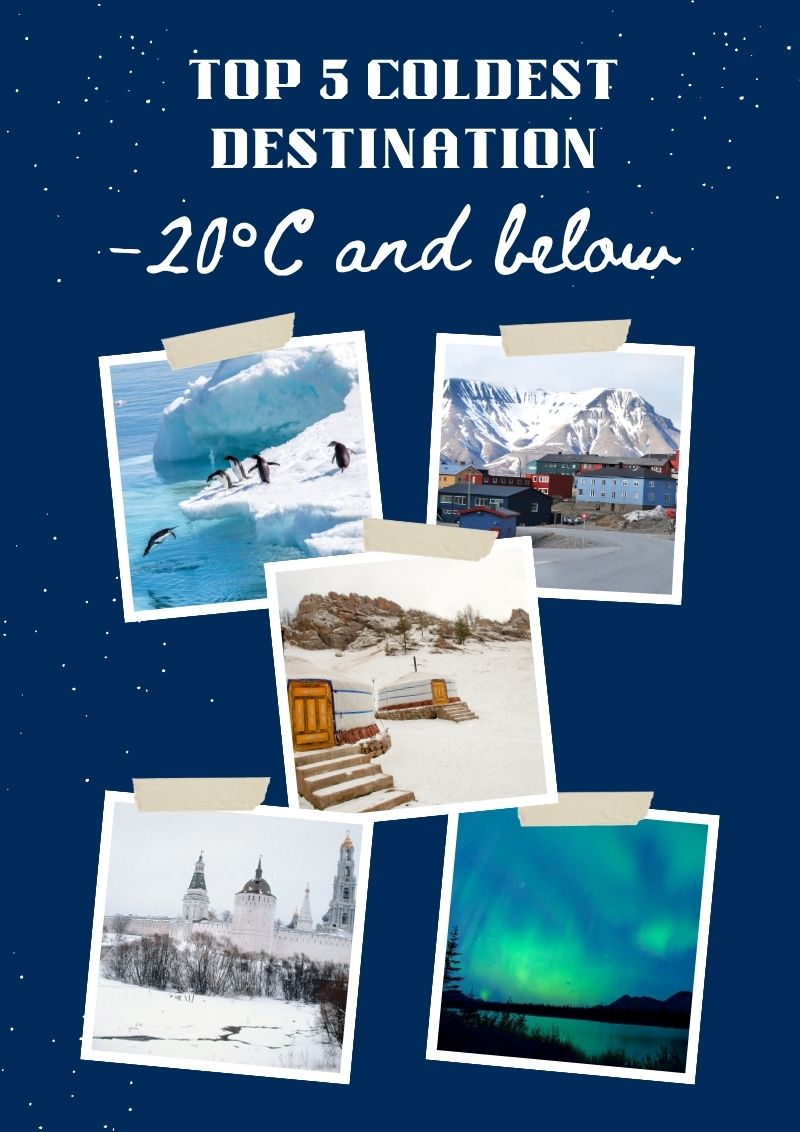
Think Harbin is cold? Wait until you see these.
For many Singapore travellers, a winter holiday usually means Japan, South Korea, China, Harbin or Lapland.
But what if you’ve experienced winter before and want to go somewhere even colder?
Imagine cruising past giant icebergs in Antarctica, chasing the Northern Lights in Alaska, exploring the Arctic wilderness in Svalbard or experiencing winter with Mongolia’s nomadic communities.
Here are 5 of the coldest places you can actually visit — including how cold they really get and what travellers are more likely to experience.
1. Antarctica 🇦🇶
Record Low: −89.2°C
Antarctica holds the record for the coldest natural temperature ever measured on Earth: −89.2°C at Vostok Research Station in 1983.
Don’t worry — that’s not where most tourists go.
Most travellers visit the Antarctic Peninsula, usually on an expedition cruise departing from Ushuaia, Argentina.
What Temperature Will Travellers Experience?
During the main tourist season from around November to March, temperatures around the Antarctic Peninsula are considerably warmer than the famous −89°C record.
Conditions vary depending on the month, location and wind, so always check with your expedition operator before packing.
Why Go?
Antarctica is unlike anywhere else on Earth.
You may experience:
- Huge glaciers and icebergs
- Thousands of penguins
- Seals and whales
- Zodiac boat excursions
- Incredible untouched landscapes
- Almost no signs of civilisation
If you want a winter adventure that feels completely different from Japan, Korea or even Harbin, this is it.
2. Svalbard, Norway 🇳🇴
Record Low: Around −46°C
Located between mainland Norway and the North Pole, Svalbard is one of the northernmost places in the world that tourists can realistically visit.
Its main settlement, Longyearbyen, is only around 1,300 km from the North Pole.
What Temperature Will Travellers Experience?
Winter temperatures are often far warmer than Svalbard’s record low, but conditions can still be seriously cold.
Wind, darkness and spending long periods outdoors on activities such as snowmobiling and dog sledding can make the cold feel much more intense.
Why Go?
Depending on when you visit, you can experience:
- Northern Lights
- Polar Night
- Dog sledding
- Snowmobile expeditions
- Ice caves
- Arctic wilderness
- The possibility of seeing polar bears in the wild
If you’ve been dreaming about travelling deep into the Arctic without going all the way to the North Pole, Svalbard is one to put on your list.
3. Oymyakon, Russia 🇷🇺
Record Low: Below −60°C
Oymyakon in Siberia is famous as one of the coldest permanently inhabited places on Earth.
Unlike Antarctica, people actually live here throughout the year.
What Temperature Will Travellers Experience?
This is one destination where the extreme temperatures aren’t just historical records.
During the coldest part of winter, temperatures can regularly fall below −40°C.
For Singapore travellers used to 30°C weather, it’s difficult to imagine what that actually feels like until you’re standing outside in it.
Why Go?
Travellers who make the journey come to experience what everyday life is like in genuine extreme cold.
You may experience:
- Frozen eyelashes within minutes
- Thick ice fog
- Vast frozen landscapes
- Traditional Yakut culture
- Extreme-cold photography
- Daily life adapted to some of the coldest conditions on Earth
This isn’t your typical winter holiday — and that’s exactly the appeal.
4. Ulaanbaatar, Mongolia 🇲🇳
Record Low: Around −40°C+
Ulaanbaatar is widely known as one of the coldest capital cities in the world.
Mongolian winters are long, dry and cold, but the experience is very different from the winter cities Singaporeans commonly visit.
What Temperature Will Travellers Experience?
Winter temperatures can frequently stay well below freezing and can drop significantly lower during cold spells.
Outside the city, exposed landscapes and strong winds can make conditions feel even colder.
Why Go?
Winter transforms Mongolia’s huge open landscapes.
Depending on your itinerary, you could experience:
- Staying in traditional gers
- Meeting eagle hunters
- Horse riding across snowy landscapes
- Dog sledding
- Winter festivals
- Frozen Lake Khövsgöl
- Visiting nomadic communities
If you’re more interested in nature and culture than shopping streets and ski resorts, Mongolia offers a completely different winter experience.
5. Fairbanks, Alaska 🇺🇸
Record Low: Around −54°C
Fairbanks is one of the world’s best-known destinations for seeing the Aurora Borealis.
It’s also one of the more accessible destinations on this list, with established hotels, winter tours and tourism infrastructure.
What Temperature Will Travellers Experience?
Deep winter can be extremely cold, with temperatures sometimes falling below −20°C and much lower during cold spells.
Northern Lights tours can also involve standing outside at night for long periods, so the temperature on your weather app doesn’t always tell the full story.
Why Go?
Popular winter experiences include:
- Northern Lights viewing
- Chena Hot Springs
- Dog sledding
- Ice fishing
- Snowmobiling
- Ice sculpture events
- Frozen landscapes and wildlife experiences
Fairbanks is a good choice if you want a serious winter experience without travelling somewhere completely remote.
How Cold Are These Places Really?
Record temperatures make great headlines, but they’re not necessarily the temperatures you’ll experience during your holiday.
| Destination | Record Low | What Travellers Should Know | Best For |
|---|---|---|---|
| Antarctica | −89.2°C | Tourist areas are far warmer than the record low | Penguins, glaciers & expedition cruises |
| Oymyakon | Below −60°C | Winter can genuinely fall below −40°C | Ultimate extreme-cold experience |
| Fairbanks | Around −54°C | Deep winter can fall well below −20°C | Northern Lights & hot springs |
| Svalbard | Around −46°C | Wind and long outdoor activities matter | Arctic wilderness |
| Ulaanbaatar | Around −40°C+ | Very cold, dry winter with exposed landscapes | Nomadic culture & winter scenery |
The important thing is not to choose your winter clothing based on the lowest temperature ever recorded.
Instead, check the expected weather for your actual travel dates and consider how much time you’ll spend outdoors.
Travelling Somewhere Below −20°C? What Should You Wear?
If you’ve survived winter in Japan or Korea before, you might assume the same winter jacket will work anywhere.
Not necessarily.
There’s a big difference between walking around Tokyo at 5°C and standing outside watching the Northern Lights at −20°C.
For extreme-cold destinations, think about your clothing as a complete system rather than just buying the thickest jacket you can find.
Base Layer
Start with a good thermal top and thermal leggings.
The base layer sits closest to your skin and helps retain body heat. Read more how to choose base layer here
Mid Layer
Add an insulating layer such as fleece or wool.
Depending on the temperature and how long you’ll be outside, you may need additional insulation. Read more about mid layer guide here
Outer Layer
Your outer jacket should provide enough insulation for the expected temperature while protecting you from wind.
For destinations where you’ll encounter snow or wet conditions, waterproofing is also important.
Pair it with insulated or waterproof winter pants, especially if you’ll be outdoors for long periods.
Don’t Forget Your Hands, Feet and Face
Having a warm jacket doesn’t help much if your fingers and toes are freezing.
For extreme cold, consider:
- Proper insulated winter or snow boots
- Wool or thermal socks
- Insulated gloves or mittens
- Warm beanie that covers your ears
- Neck warmer
- Balaclava or other face protection
Read more about why do you need travel accessories here
And remember: −20°C in one destination may not feel exactly the same as −20°C somewhere else.
Wind, snow, humidity, how long you’re outdoors and whether you’re walking or standing still all make a difference.
Do You Need to Buy Everything for One Trip?
If you’re travelling somewhere below −10°C or −20°C for the first time, it’s normal to wonder:
“Is the winter jacket I already have warm enough?”
You don’t necessarily need to buy an entire extreme-winter wardrobe before finding out.
At Winterbuddy Singapore, you can bring your existing winter jacket along for your free try-on.
We’ll help you look at your destination, travel month, expected temperature and activities, then work out what you may still need.
If your existing gear is suitable, great.
If you need something warmer, you can rent winter jackets, insulated pants, snow boots and cold-weather accessories instead of buying everything for a one- or two-week trip.